
Where the Everyday Turns Sacred
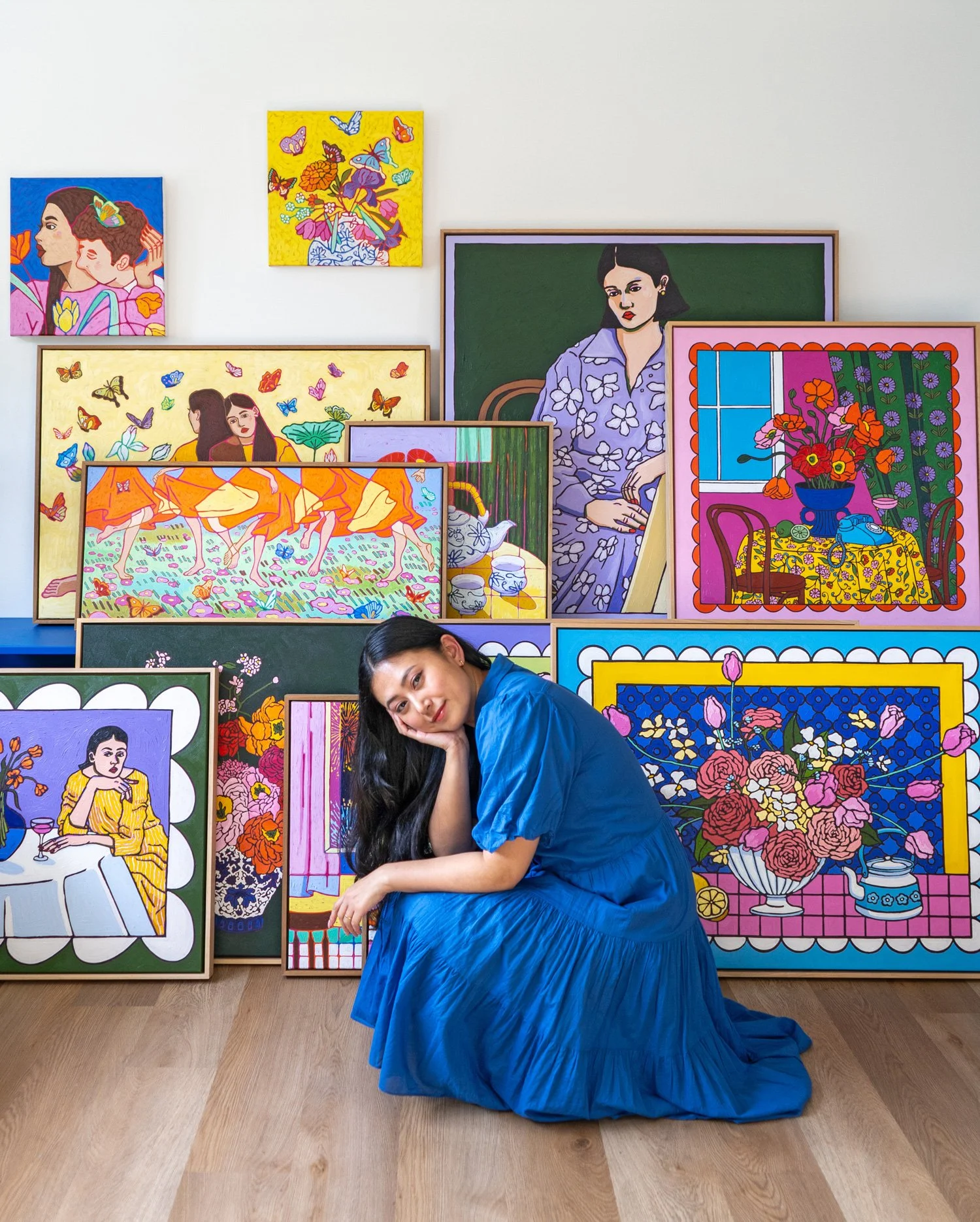
Lisa Nooin
Post-Impressionism | San Francisco, CA
Lisa Nooin is a San Francisco based Vietnamese Australian artist whose work celebrates the beauty of everyday life. Drawing inspiration from ordinary objects, nature, and women, she creates vibrant still life compositions that explore joy, ritual, and connection.
With a background in communication design, her practice is informed by a strong sensitivity to color and composition. Since returning to painting full time in 2020, she has developed a body of work centered on emotional memory, shared experience, and the quiet significance of daily rituals.
April 3, 2026
Where do you feel your story as an artist truly begins?
My story as an artist truly begins with wanting to ease my anxiety and a need to slow down. No art school, no formal training, just a deep urge to pause and appreciate the ordinary moments that work and stress had been drowning out. Painting became my way of holding onto those moments before they disappeared. Over time it grew into something more: a way to process emotions, celebrate love, and connect with others. My journey really began when I realized art wasn't just something I enjoyed. It was something I needed, to understand myself and find stillness in everyday life.
What early experiences or environments shaped the way you see the world?
I think my eye was shaped early, starting around age five when I first picked up a pencil. Growing up, I was always drawn to color, small details, and the quiet beauty in ordinary things most people walk past without noticing. That sensitivity never left me.
My design education and years working in agencies and tech sharpened how I see composition and color in a more structured way. But it was the pandemic that truly changed how I experience the world. Slowing down forced me to look closer, at everyday objects, at nature, at the simple moments that tend to get lost when life moves too fast.
Living in San Francisco, a city full of energy and contrast, also shapes how I see things. There is so much beauty here alongside so much noise. I think that tension between stillness and chaos is something that quietly shows up in my work.
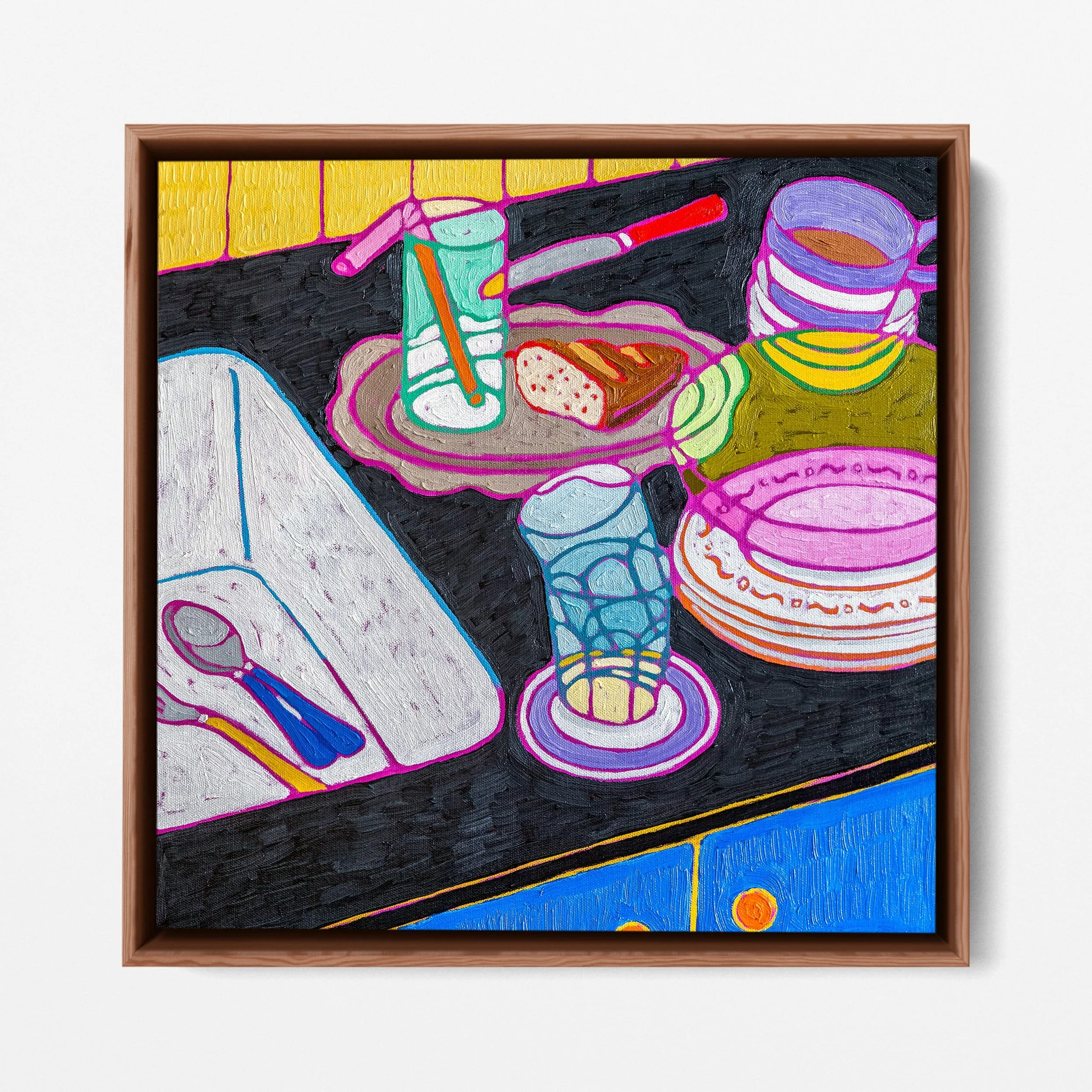
After Our Meal
Who were the people, places, or moments that formed your sense of self?
Honestly, my art did. When I started taking my work seriously and began developing my first body of work, something shifted. Working on a collection forced me to go deeper, to really think about what I wanted to say and why. That process revealed sides of myself I had never stopped to examine before. In many ways, painting didn't just help me express who I am. It helped me figure it out.
What experiences outside the studio feel essential to understanding your work?
Rest is a huge part of my practice, even if it doesn't look like work. My art is about appreciating simple everyday moments
“
My art is about appreciating simple everyday moments
so slowing down and enjoying my daily routines keeps me grounded and connected to what I paint. Without that space to breathe and recharge, I lose touch with the very thing my work is about.
How does your background or community show up in your practice, even in subtle ways?
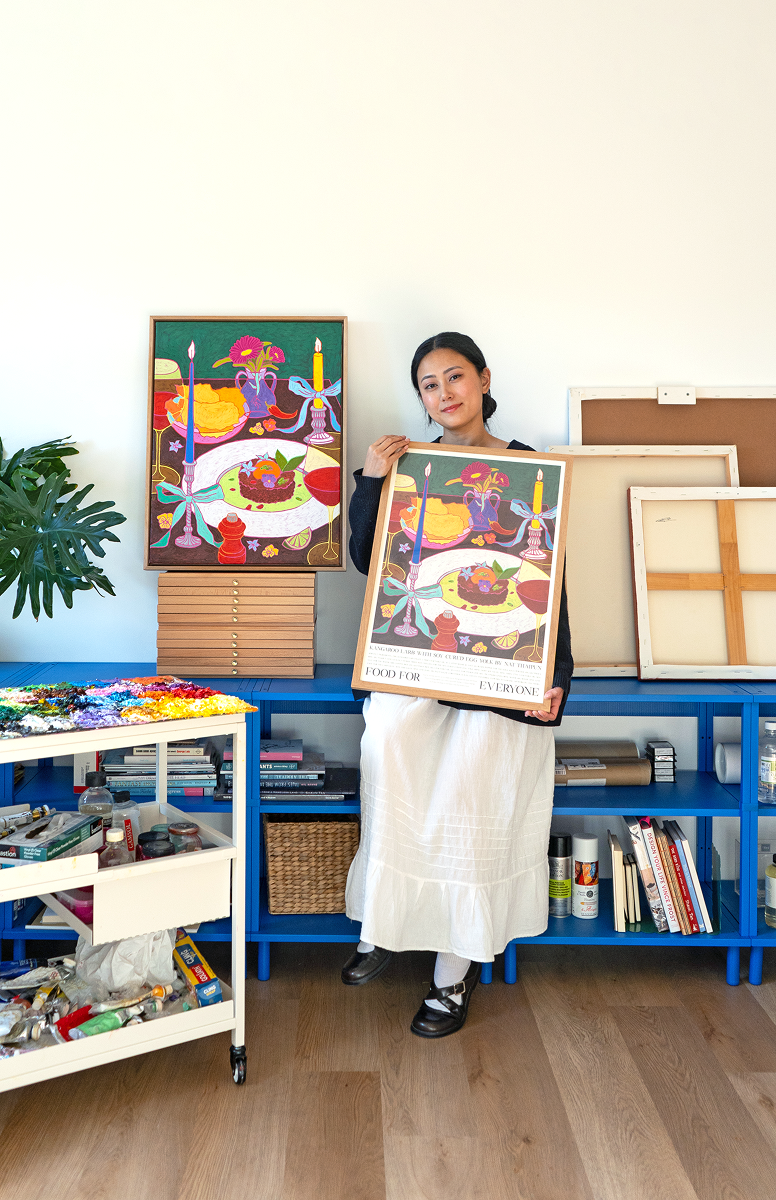
Food is a big one. Sharing meals with family and friends is something I treasure deeply, and it shows up constantly in my still life work. To me, food symbolizes love and connection, and I think that meaning comes through in the paintings even when people don't realize it at first.
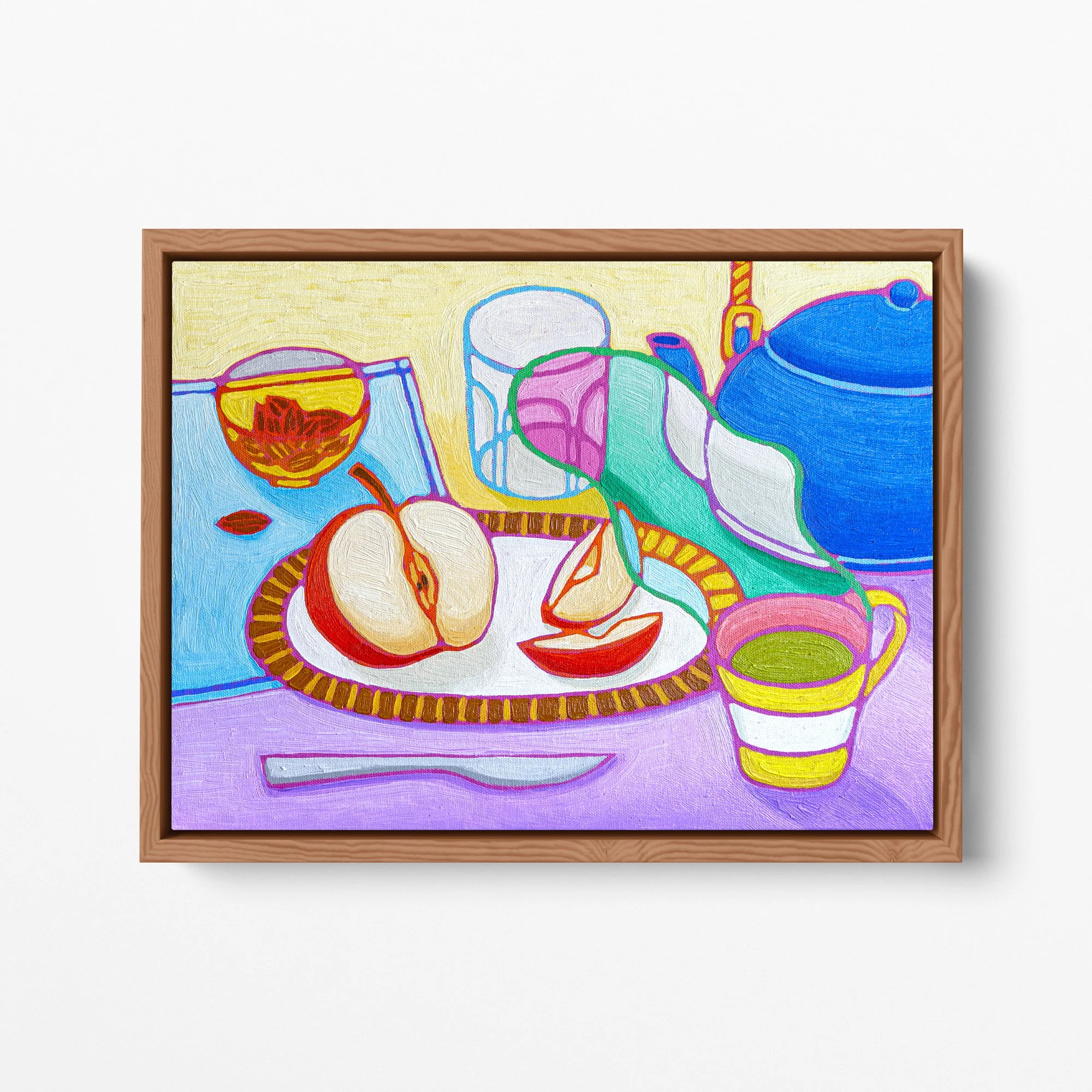
Apples in the Afternoon
How would you describe your practice today, and how has it evolved over time? Why do you think that is?
I am all about balance now, and I try to reflect that in my work by painting scenes of simple everyday life. I used to work late into the night and on weekends because I was juggling a full time job with my art practice (and honestly I am still guilty of this sometimes!). But I have learned that looking after my mental health makes me a better artist. Rest and balance are not luxuries. They are part of the work.
What materials or techniques feel most like “home” to you, and why?
Oil paint has always been my home. I am a slow painter and I love being able to take my time, blend, and really sit with a piece. But lately I have been craving something looser, so I have been experimenting with inks, watercolor, and gouache. It is a fun and slightly terrifying creative stretch!
What does your process look like—slow, intuitive, research‑driven, ritualistic?
My process is actually quite simple, though very personal. It always begins with a brain dump: I sit down and write whatever comes to mind, pouring my thoughts onto a blank page until a loose narrative starts to form. It might be how I am feeling, something that has happened in my life, or a cause I care deeply about. I want my work to feel honest, and I am always trying to tell a story that feels true to me.
Once I have landed on a theme, I dive into research: symbolism, color references, anything that helps bring the story to life visually. Then I start sketching and planning the paintings as a group so they feel cohesive as a collection. I usually aim for eight to ten pieces, and each painting can take about a week, sometimes longer.
Something most people don't know is how much of my process starts with writing. Before the brushes even come out, it is all about words, feelings, and storytelling. That written foundation becomes the emotional thread that ties everything together.
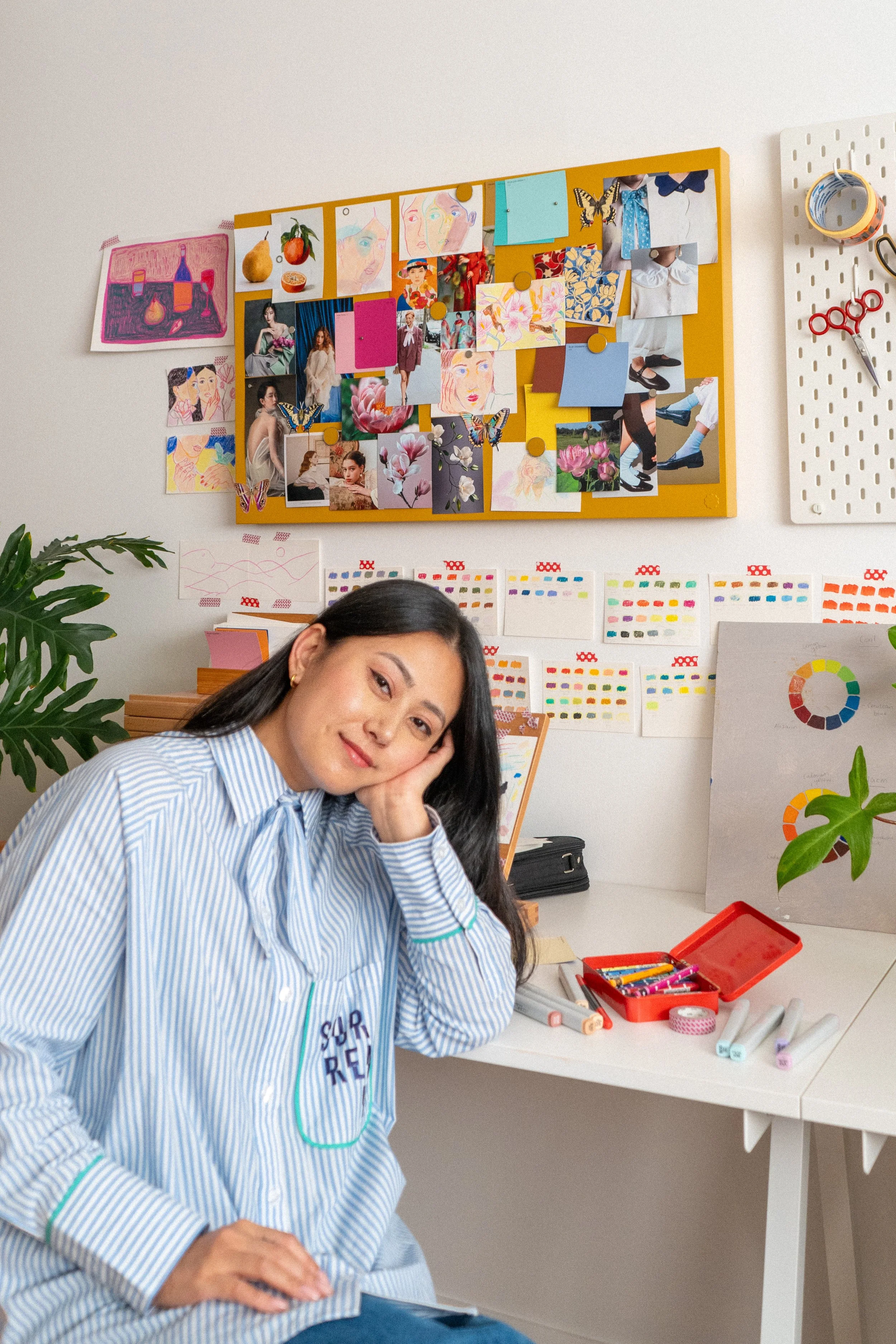
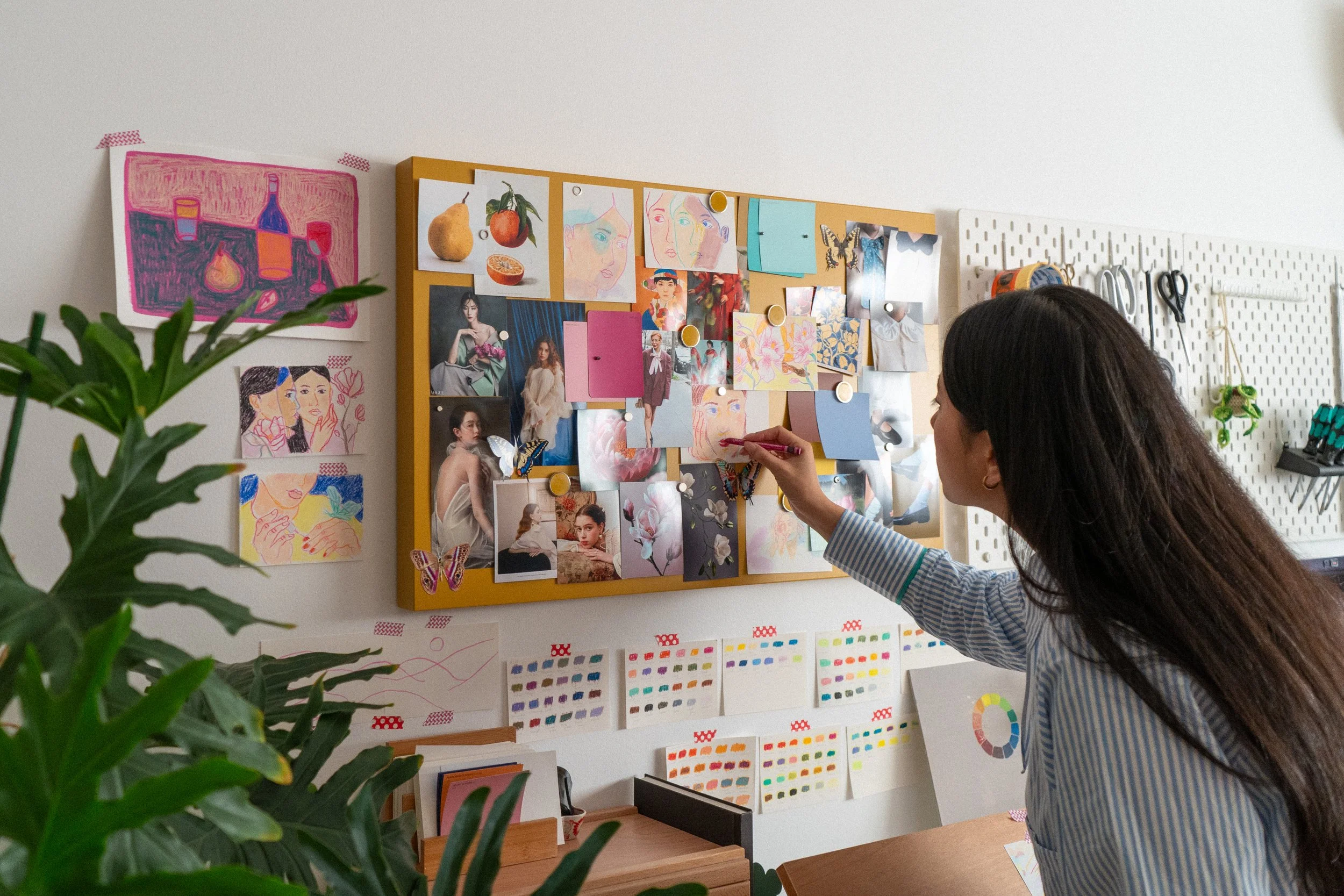
Lisa planning a collection in her studio
What role does experimentation or play have in your work?
A crucial one! Without play and experimentation I never would have figured out what I wanted to paint or how I wanted to paint it. It is such an important part of growing as an artist. My advice is always to keep room for play and try as many materials and subjects as you can. You never know what you might discover about yourself in the process.
What are three adjectives you would use to describe yourself? Are these the same you would use to describe your art? Why or why not?
My art is vibrant, whimsical, and expressive. I would describe myself as curious, empathetic, and driven. They are not the same words, but I think they are connected. The curiosity and empathy feed directly into the work, and the vibrancy and whimsy are just what happens when those qualities find their way onto the canvas.
What questions are you trying to answer—or keep alive—through your work?
I am not sure I ask myself questions as much as I dig through stories and emotions and try to make sense of them through painting. My art is really about figuring out who I am and what I value most.
“
The themes I keep returning to are love, connection, transformation, and slow living.
Those feel like the things I am always trying to understand more deeply.
What do you hope people feel or understand when they encounter your work?
A sense of home. A little nostalgia. I want people to look at my work and feel something familiar, like being reminded of a quiet moment they had forgotten to appreciate. I explore connection and the extraordinary in the ordinary, and I hope that comes through in a way that feels warm and personal.
What do you think your work is teaching you about yourself?
Every collection teaches me something new. My first body of work showed me that I am someone who deeply values living in the present and finding meaning in everyday moments, even the quiet and ordinary ones. The collection I am working on now is teaching me to stop waiting for the right moment and to show up and work for what I want. I am still deep in it, but I cannot wait to see what else it uncovers.
If someone truly understood your work, what would they understand about you?
That I think deeply about life and that the things that matter most to me are not things at all. I love my friends and family and I treasure the connections I have with the people in my life. Those relationships and shared experiences shape who I am, and I think they quietly shape every painting too.
What are you reaching toward in your practice that you haven’t yet touched?
I want to loosen up. My work can feel a little stiff and controlled at times.
“
I’m craving more freedom in how I paint. I want to be less precious about perfection
and let the work breathe a little more. It is something I am actively working on and it feels exciting and uncomfortable in equal measure.
How do you imagine your work evolving as your life continues to unfold?
I would love to see my work expand beyond walls. Clothing, furniture, stationery: I want my art to live in people's everyday lives in a real and tangible way. There is something really special about the idea of your work being used and interacted with rather than just displayed. That feels like the next chapter.
What are you most proud of at this point in your artistic career?
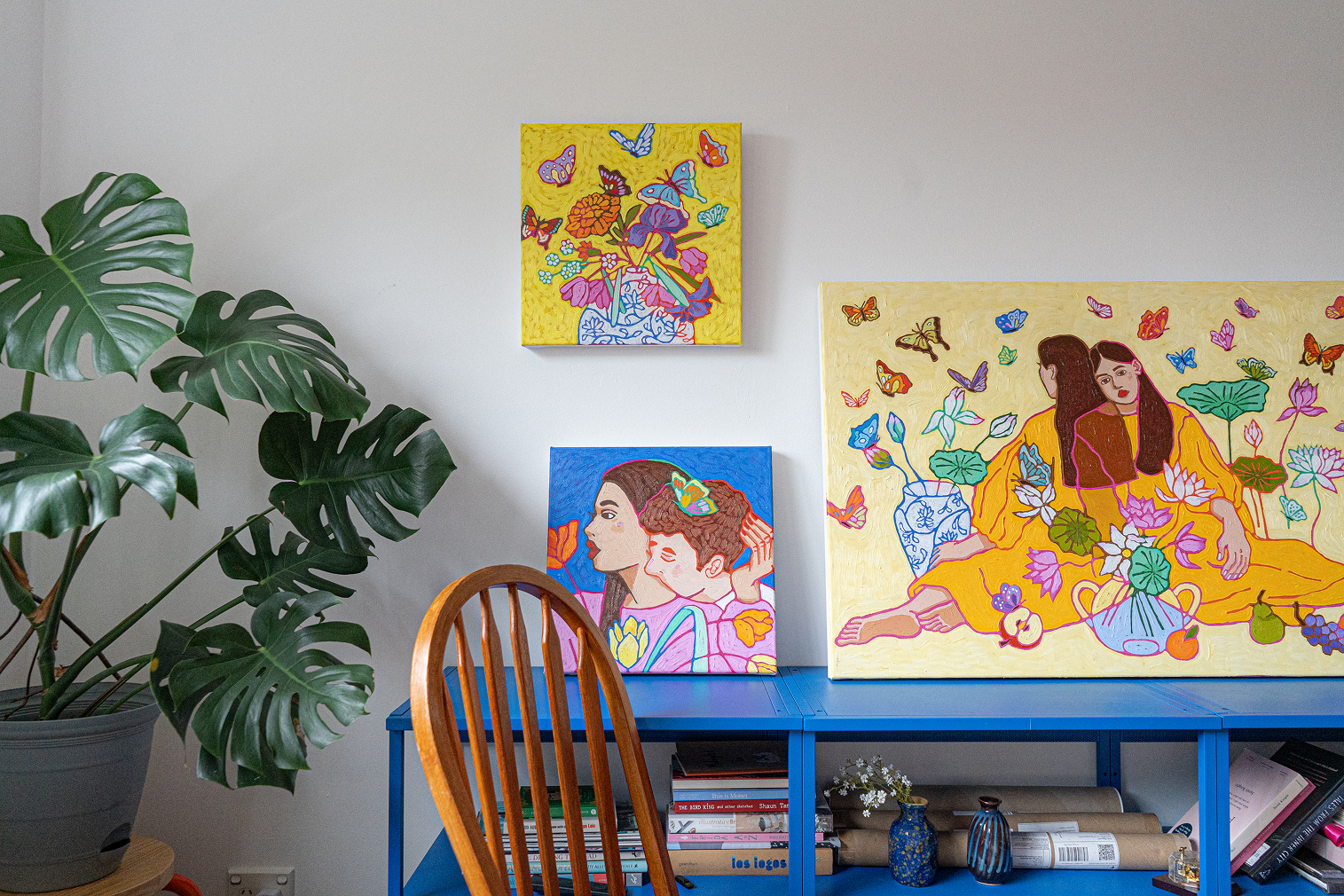
The fact that people recognize my work from a single glance. I have had people tell me they can spot a Lisa Nooin painting straight away, and that genuinely makes me so happy. Developing a recognizable style takes time and a lot of self trust, and knowing that it is coming through means a great deal to me.