
Gritty in the Practice of Letting Go
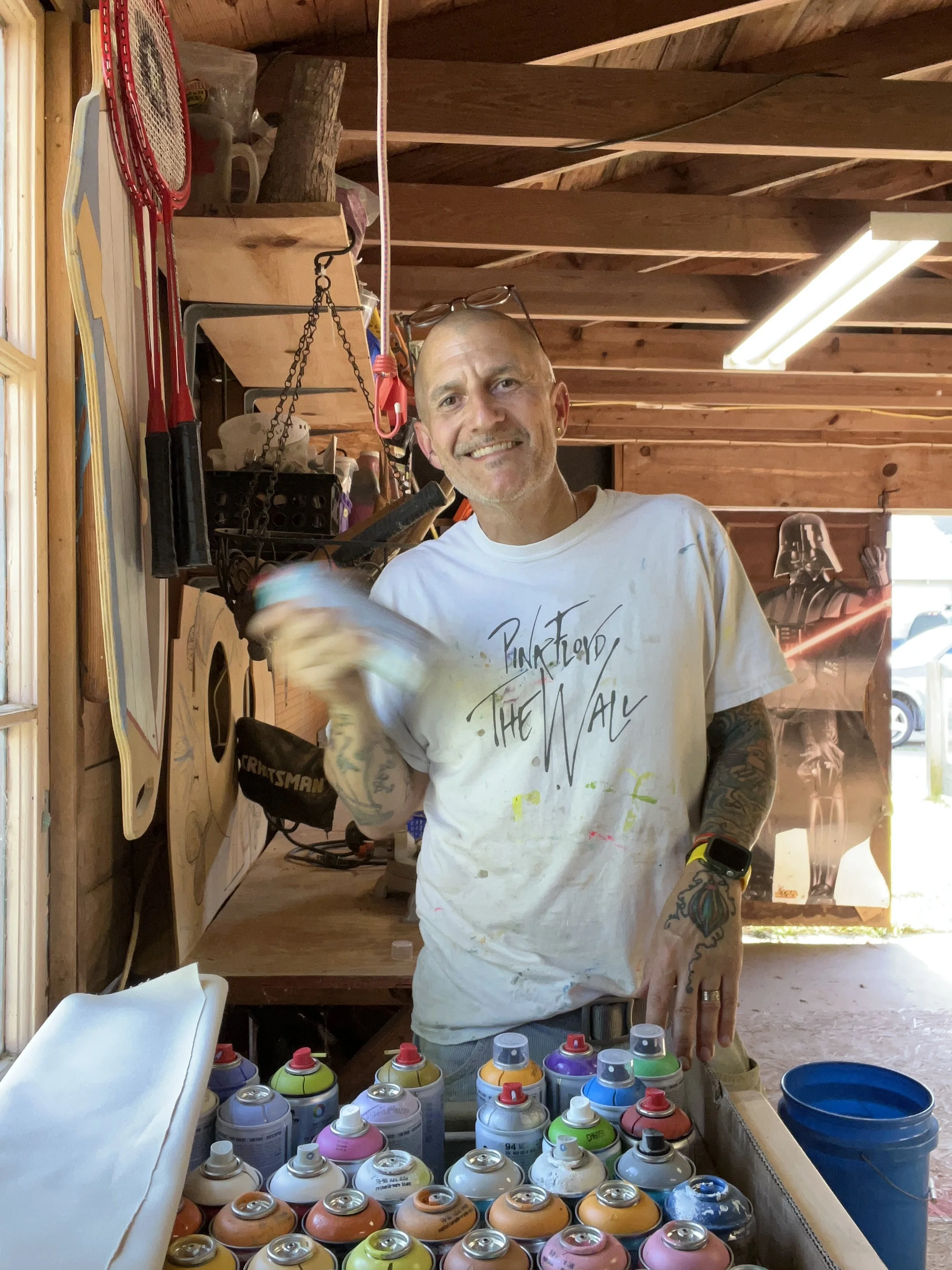
Robbie Austin
Process-Based Abstraction | Lake Charles, LA
Robbie Austin is a Louisiana-based artist who works on pages that have already lived a life. Maps, ledgers, and field books become sites of quiet intervention, where a single line, a softened corner, or a surge of electric color shifts the entire reading. His practice begins as a reader, tracing systems, scars, and histories embedded in the surface, then responding with marks that feel both inevitable and slightly withheld.
Living and working within the same small radius in Lake Charles for decades, Austin’s sense of place is not backdrop but structure. Weather, repetition, and the slow accumulation of lived experience quietly inform each decision. Music runs alongside this rhythm, a steady undercurrent shaping pace and tone, while questions of faith hover at the edges, less declared than felt. His work moves between restraint and voltage, treating paper as skin that remembers, and composition as a balance between what is revealed and what resists.
April 26, 2026
What early experiences or environments shaped the way you see the world?
I grew up and stayed in the same place, so the world didn’t change quickly instead it layered. Lake Charles gave me repetition: the same streets, weather patterns, and routes traced over years until they started to feel like a kind of language. Hurricanes, heat, slow afternoons, Catholic school rhythms - all of it built a sensitivity to what accumulates rather than what arrives new.
There was always a sense that things were already in motion before I got there. Maps, systems, rituals, music playing somewhere in the background; they were all structured but emotional. That stayed with me. I think that’s why I approach a page as something already alive. I’m not starting it. I’m stepping into it.
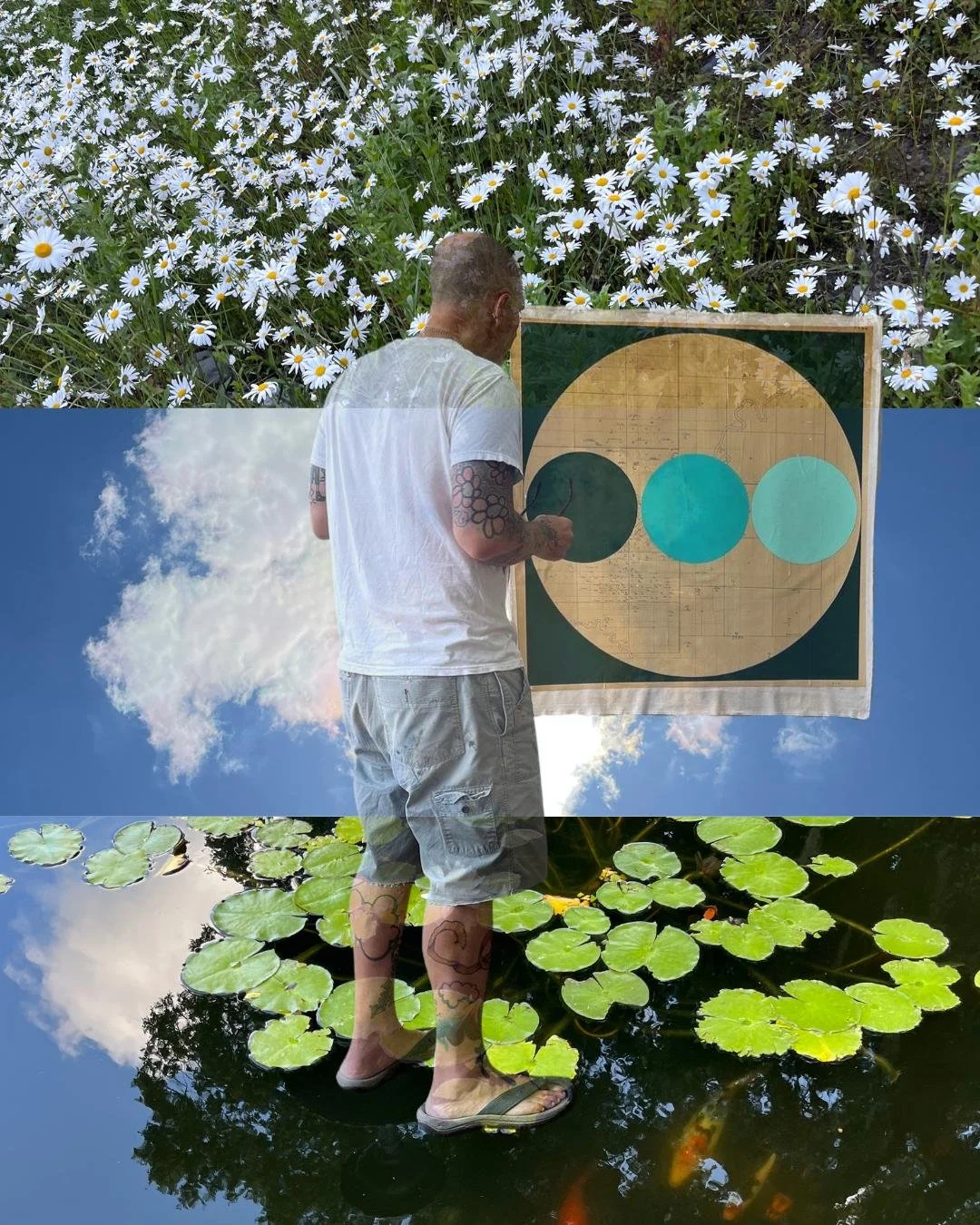
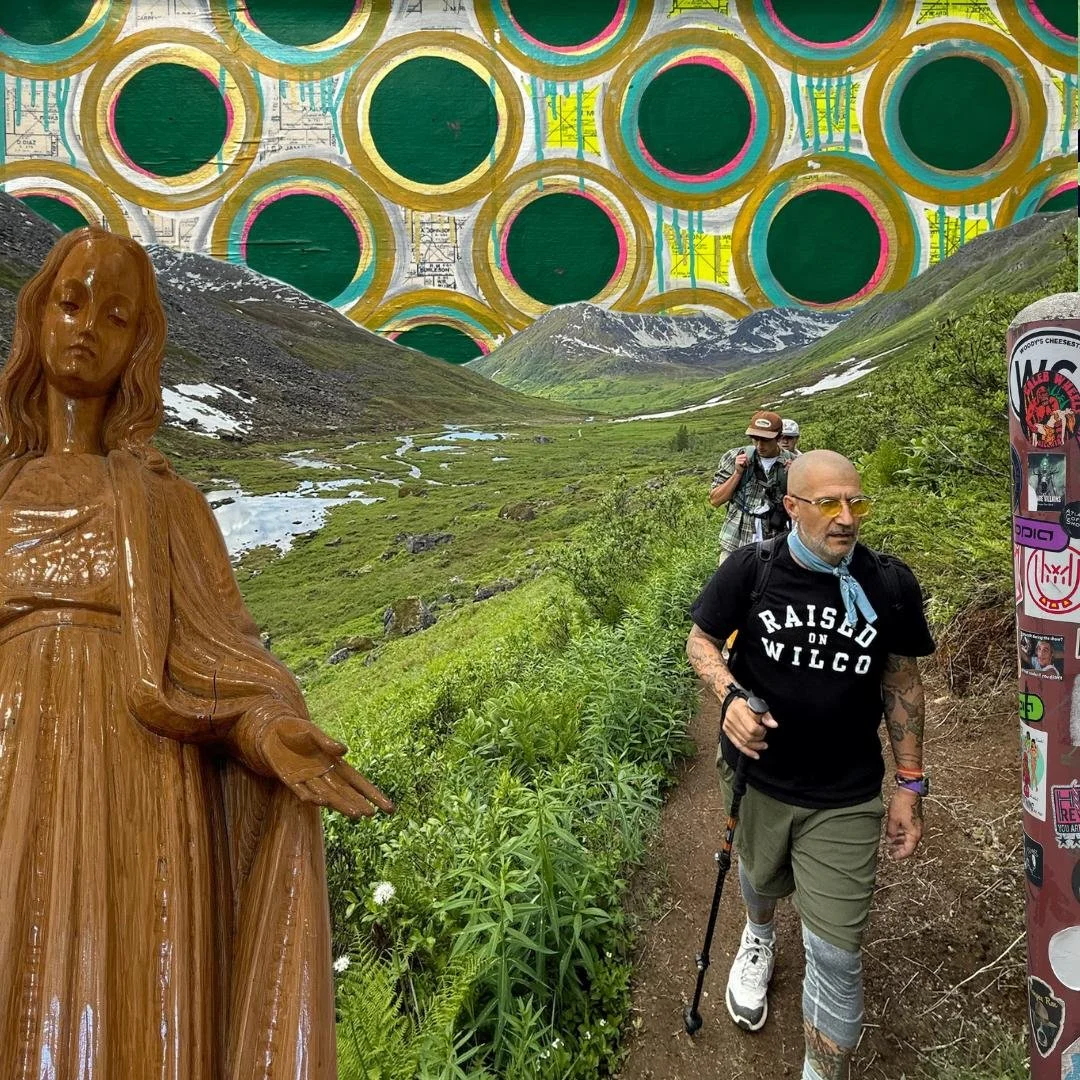
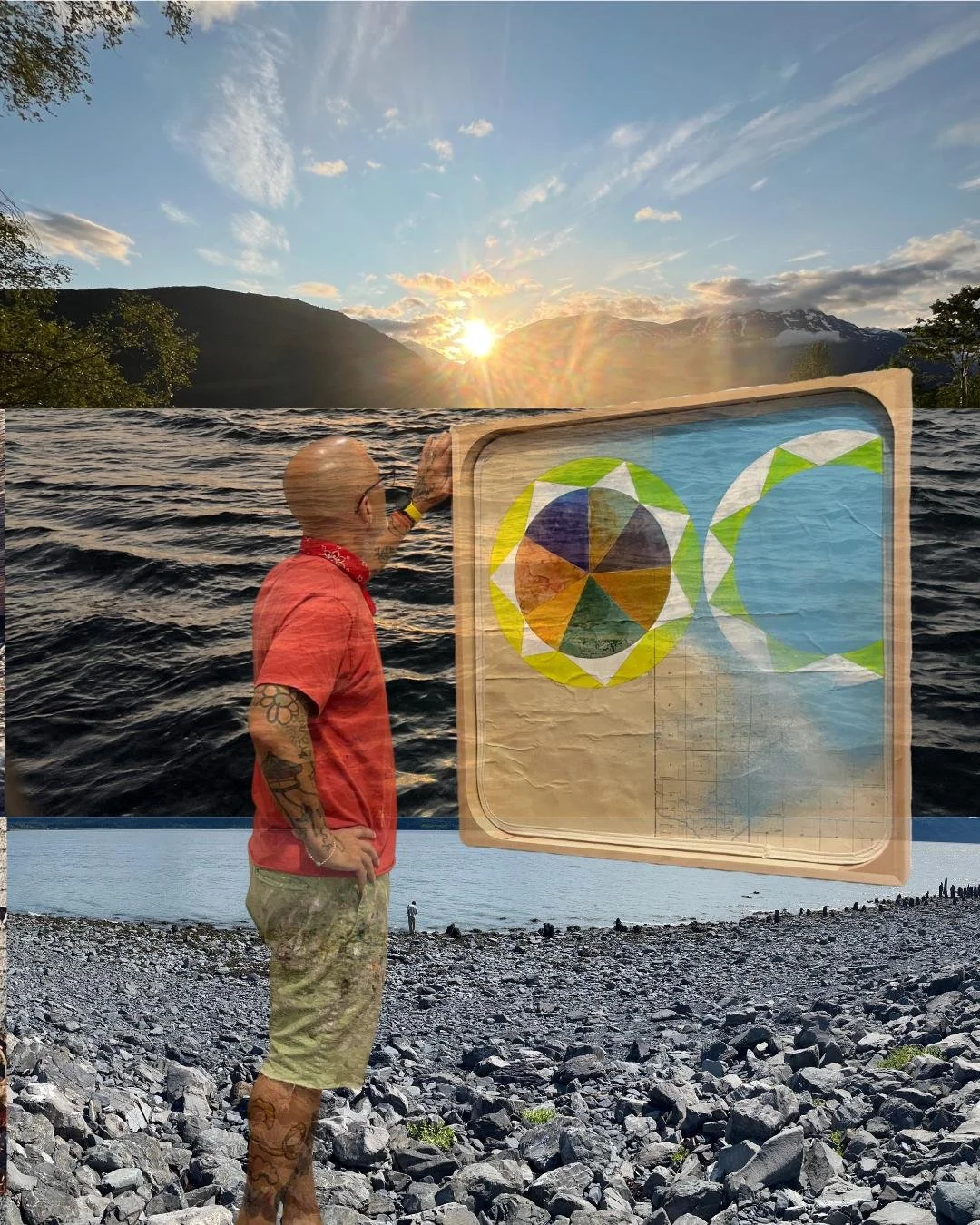
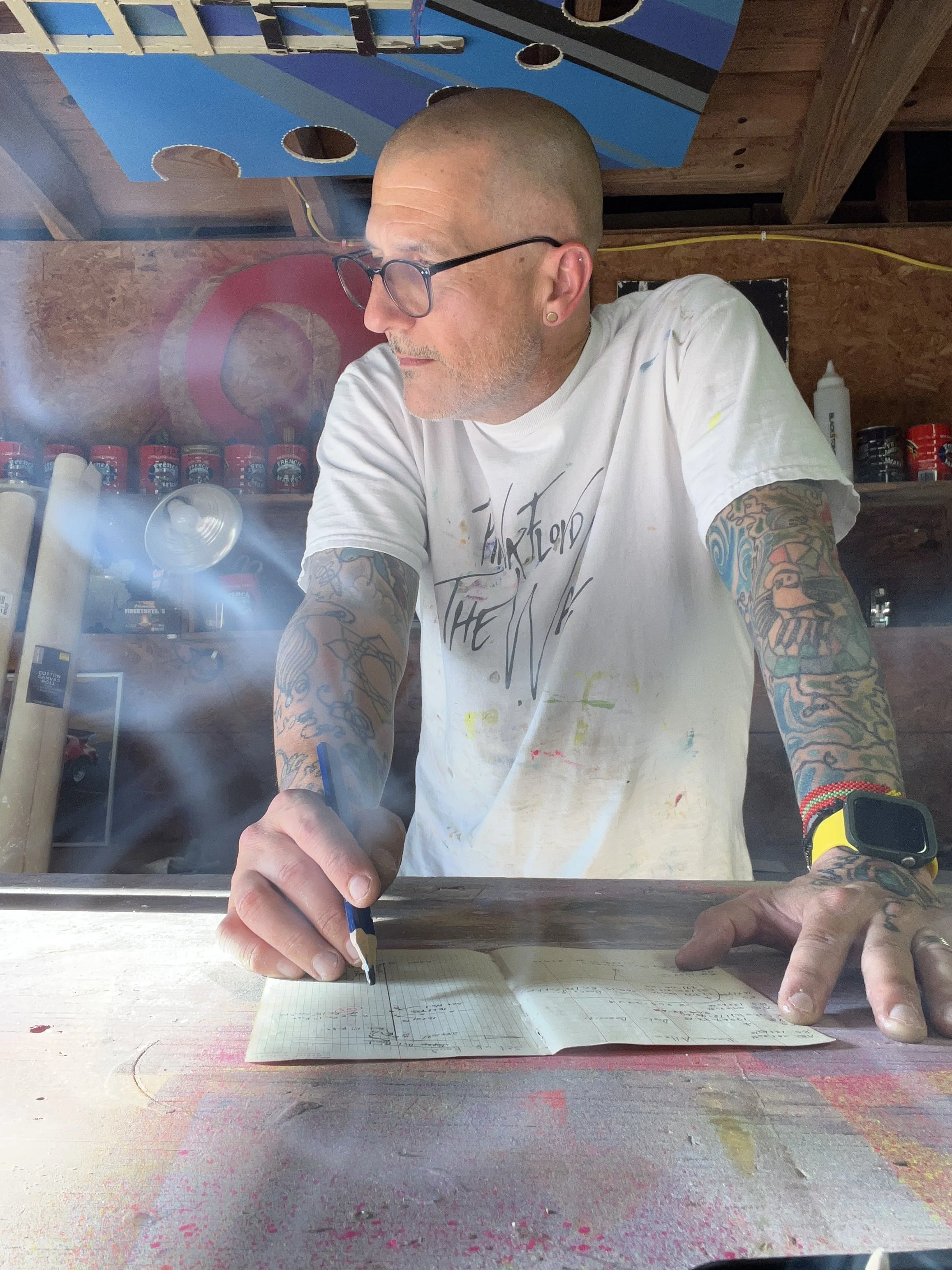
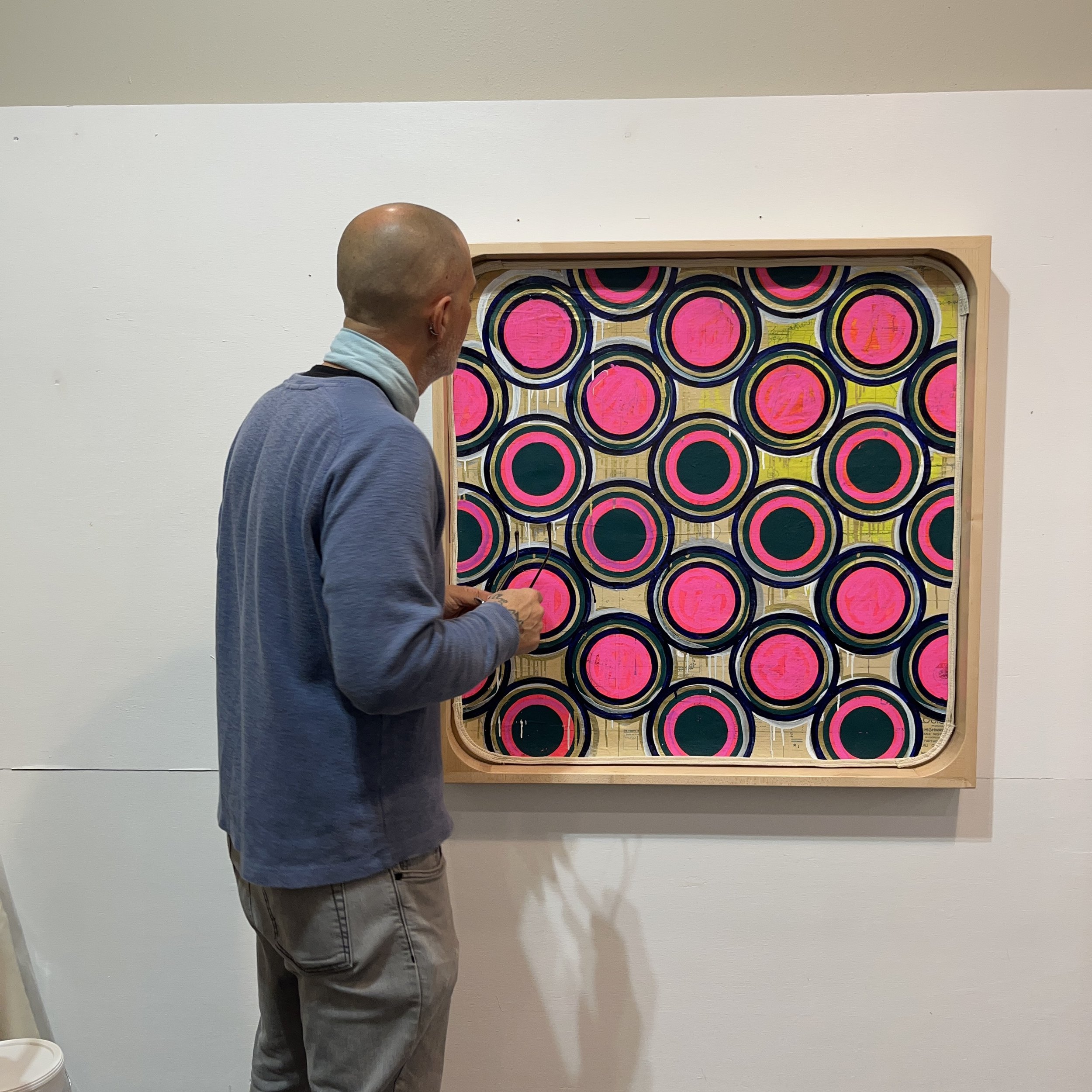
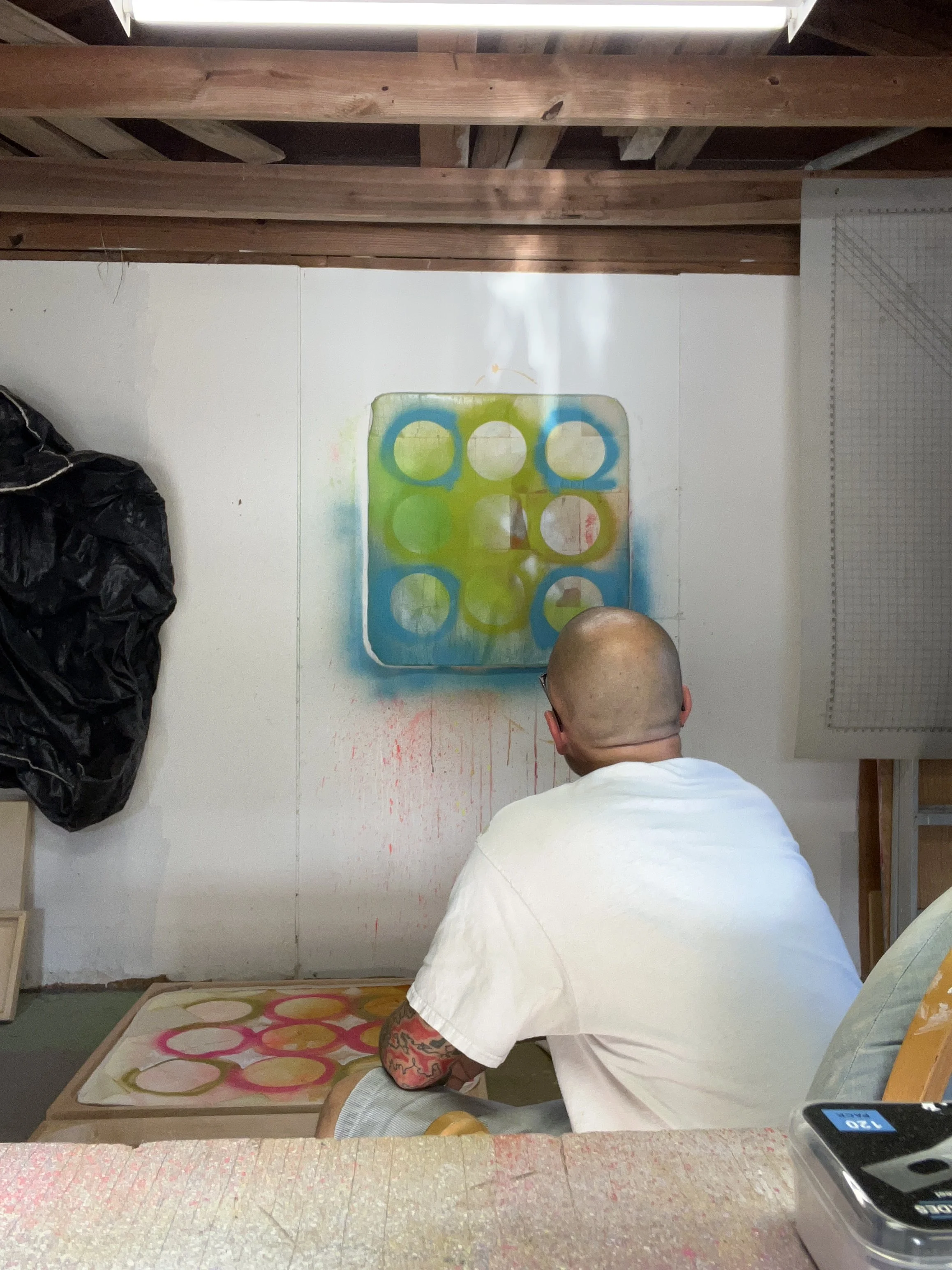
Robbie Austin “stepping into” his works on paper. Photos by Asha Austin.
Is there a moment or chapter in your life that changed your relationship to making?
Hurricanes Laura and Delta in 2020 changed everything. After one of the storms, a tree from my yard fell into my neighbor’s and exposed a cache of old field books - decades-old pages filled with maps, notes, and records that had been buried out of sight. She gathered them and passed them on to me. It felt less like discovery and more like something resurfacing, then being handed over.
That moment shifted my role.
I stopped thinking of myself as someone who builds images and started thinking more as someone who enters them.
“
The work didn’t need to be forced. Instead it needed to be read, then answered.
It also stripped away any illusion of permanence. Making became less about holding onto something and more about participating in a longer cycle of damage, survival, and reappearance. The page already knows something. My job is to meet it there, make the smallest necessary move, and let it continue.
What does your process look like—slow, intuitive, research‑driven, ritualistic?
Slow at first, then intuitive. I begin as a reader, spending time with the page, following its systems, marks, and damage. Nothing happens until something catches.
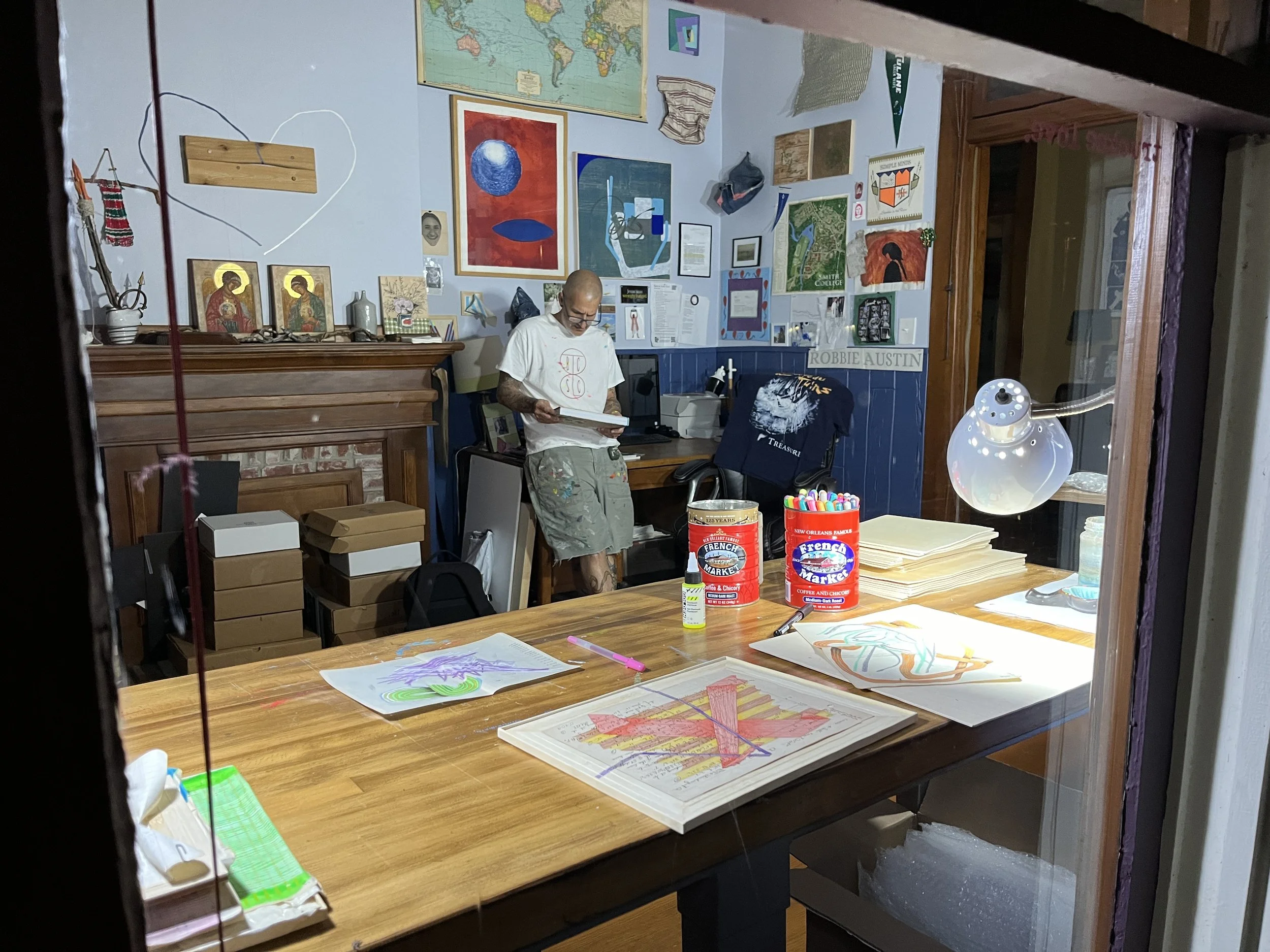
Robbie observing pages in his studio . Photo by Bit Thompson
From there it shifts. The early moves can be loose and even disruptive - spray, overlap, chance - just enough to unsettle the surface. Then it tightens. Decisions get smaller, more precise. A line placed at the edge, a corner eased, a color introduced and held back.
There’s a rhythm to it that borders on ritual, but it’s not fixed. It’s more about returning to the same conditions: quiet, attentive, a willingness to stop at the right moment. The work usually tells me when it’s done; it reaches a point where it feels intentional, but it’s unclear where that intention began.
What meaning does making hold for you right now, in this season of your life?
Right now, making feels a little more exposed. The house is quieter, my wife and I are empty-nesters.
The rhythms have changed and i feel myself listening differently. I hear… louder
I see details. I try to listen more carefully and keep my mouth shut. I notice what I notice and that produces a lot of whys.
I do want the work to hold up. I want my kiddos to see it and feel that it’s real, that it matters. And yes, I still want to be seen, but it comes in from the side door, from the periphery, through attention, repetition, and staying with the work long enough for it to speak in its own voice.
There’s a sense of responsibility in it now, but also a kind of offering. The work becomes a way of saying: this is how I’m spending my time, this is what I’m seeing, this is what I believe is worth noticing.
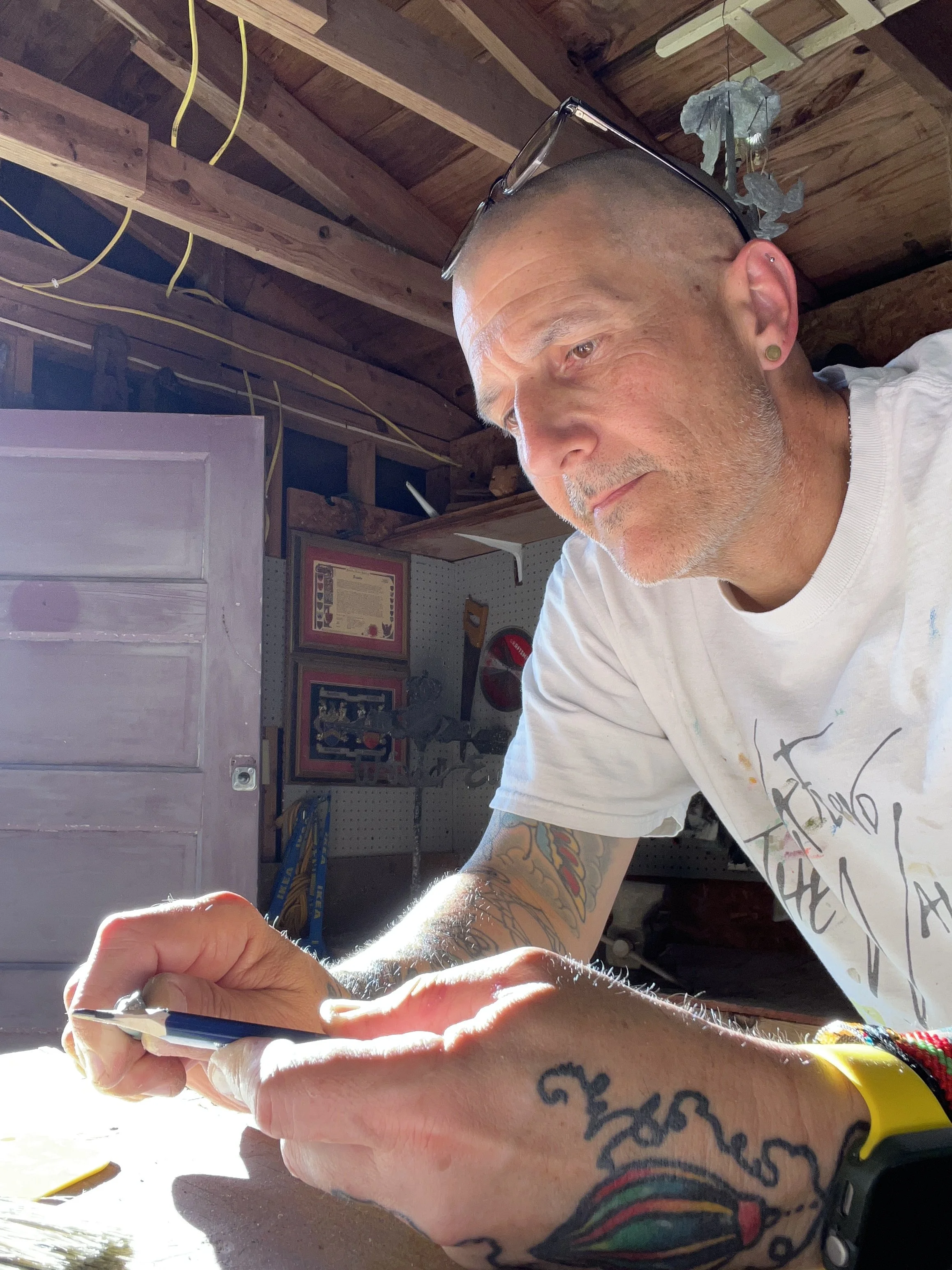
“
If someone truly understood your work, what would they understand about you?
That I’m paying attention, but not calmly. There’s an impulse to move quickly - to speak, to act - and just as strong a need to hold back. The work happens in that tension. It’s a kind of calibration.
They’d understand that I read the page, but I also interrupt it. That I’m interested in small shifts, but I get there by pushing, pulling, testing the edge of too much. Restraint isn’t natural. It’s chosen, again and again.
And maybe they’d recognize something of this stage of life in it too which is learning to step back as your kids make their own decisions, and not intervene too quickly. To resist interference. That same discipline carries into the work. To hold something open without overcorrecting it. To let it become what it’s going to become.
What are you reaching toward in your practice that you haven’t yet touched?
Clarity without losing tension. That point where the work feels fully resolved, but still alive and holding a charge. I get close, but I don’t always trust it.
I’m also reaching toward a kind of restraint that doesn’t feel like denial. Letting less happen, but having it carry more weight. Not pulling back out of caution, but out of precision.
And maybe something quieter than that; a deeper trust. In the materials, in the timing, in knowing when not to interfere.
Letting the work arrive where it needs to, without needing to prove that i was there.
“
Learn more about Robbie Austin on his website (https://robbieaustin.com/) and Instagram (https://www.instagram.com/robbieaustinstudio/).